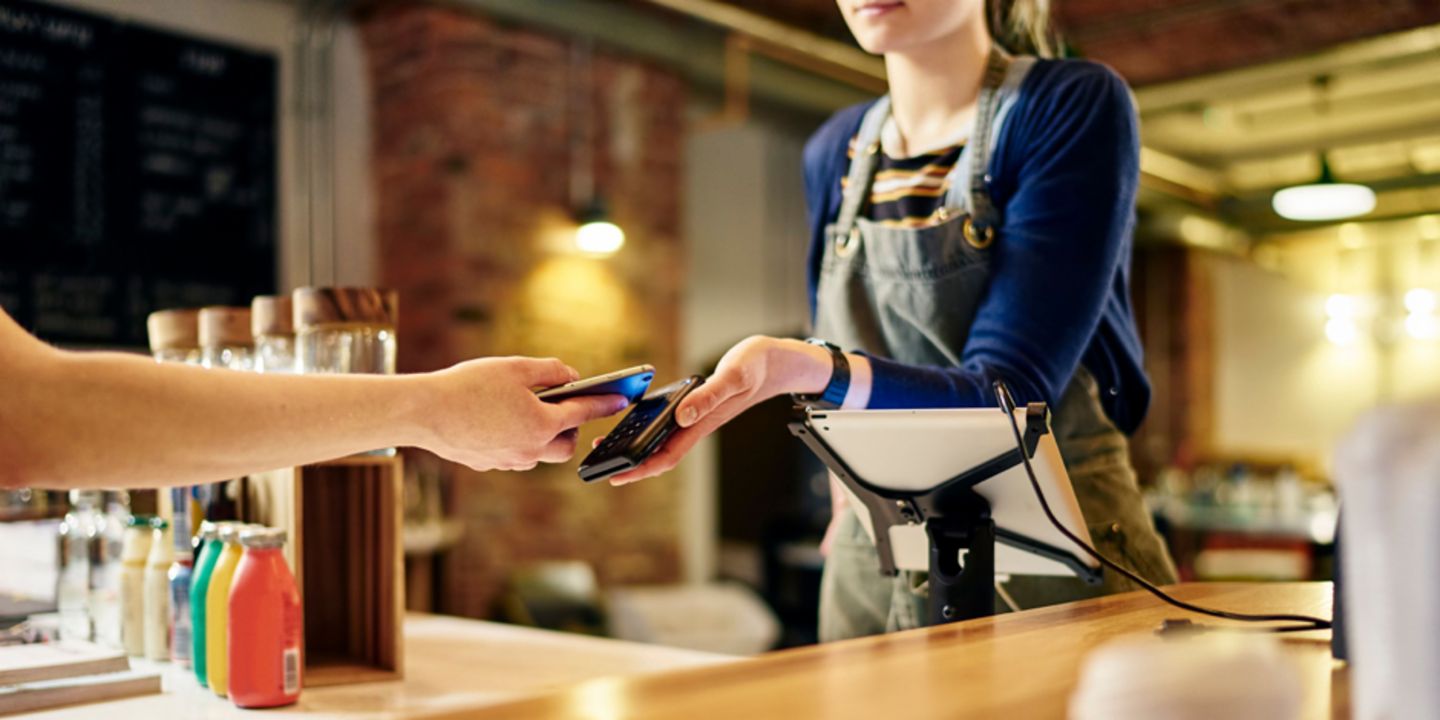
With PSD2, the EU is revolutionizing online payments
A turning point in the financial industry: the EU directive PSD2 has since January enabled the exchange of banking details. The glass account clears the way for new business models - and jeopardizes the status of established banks.
For most Europeans, January 13, 2018 was a Saturday like any other. But for banks, payment service providers and fintech companies, this date marks the beginning of a new era. Because this is the day on which the “Payment Services Directive 2” – PSD2 for short – came into force. The European Commission’s objective with the second Payment Services Directive is to make payment transactions safer, more efficient and more convenient for customers. At the same time, Brussels wants to ensure more competition and innovation in a market that has for decades been dominated by a small number of suppliers. Now even young companies from the financial sector have a fighting chance against the big banks.
One billion accounts affected
“With PSD2, there is greater access to the money transfer services market,” says Sebastian Steger, a partner at Roland Berger. According to this consulting firm, the regulation involves more than one billion bank accounts in Europe and is one of the most important changes in banking in recent years.
The policy essentially has an impact on anyone who uses online banking or makes online purchases. For one thing, PSD2 prescribes that no additional fees may be charged for payment methods such as credit card or direct debit. In addition, the liability limit has been dropped: banks must refund unauthorized bookings faster and customers are now liable only for up to € 50 and no longer € 150.
On the other hand – and this is the real crux of the matter – third-party providers may also take over processing of the payment. If the customer chooses a payment initiation service provider (PISP) – such as Klarna, the DIRECTebanking (immediate transfer) provider –, this provider can access his account and use it – with the customer’s consent. In plain language, with a few clicks the customer agrees to lift banking secrecy so that the PISP can pay the seller on his behalf.

All accounts at a glance
In addition, account information service providers (AISP) may also retrieve information if the customer agrees to this. This is particularly interesting for people who want to manage multiple accounts online and keep better track of their financial status in apps like Finanzguru or Outbank.
This means that fintechs, telecommunications providers and data companies become an official part of the payments transaction market following an audit by the respective financial supervisory authority and can therefore use the enormous wealth of data, which the banks have thus far claimed exclusively for themselves.
Banks are threatened with losing their significance
“European banks have also been moving in the direction of banking as a platform for some time,” says Peter Kleinschmidt, Leader Digital Financial Services at PWC. This is when the bank acts as the starting point for the customer journey. If the bank remains close to the customer on this journey, it can support the relationship. If not, it disappears more and more from the customer's sight and becomes a substitutable service taking place in the background.
“Those who don’t recognize the disruptive potential of PSD2 and only meet the minimum regulatory standards risk being considerably debilitated by digital competitors,” concludes a study by Roland Berger. PWC sees two options for financial service providers: they can adapt and invest in new services and they can monetize their data resources by providing access through application programming interfaces (APIs).
According to PWC, these new offerings present small- to medium-sized banks with a great opportunity to build a loyal customer base. In addition, they can share development costs through collaborations with fintechs and bring new products and services to market quickly.
Partnerships with fintechs present themselves
By contrast, larger banks need to build a platform that combines traditional and digital payment services. According to PWC experts, they, too, depend on collaborating with third parties. In an ideal situation, PSD2 can create a mutually beneficial symbiosis between banks and fintechs.
However, without the trust of customers, this will not succeed. This is something that Brussels also understands: in order to strengthen data protection, iTAN lists are expected to become obsolete by the autumn of 2018, thanks to new regulatory technical standards (RTS). The RTS prohibit what is known as screen scraping – a technique for reading information from websites. Instead, bank accounts will be accessed through programming interfaces to provide more security and transparency.
For customers, the financial revolution may have started without their notice, although the effects are already clearly noticeable. For banks, on the other hand, the race has long since been under way.
Credits: GettyImage
Explore more from EOS